
During the pandemic we are all living through, vaccines have been a triumph of scientists and medics. Vaccines have saved millions of lives, and we should all be grateful to the medics who have played their part in this. By contrast, the senior medics responsible for infection control in hospitals have, in my opinion, had a much less good pandemic. A year ago and a few months ago, I wrote about how the guidance on the wearing of masks by healthcare workers did not seem to be consistent with what we knew about how respiratory diseases, such as COVID-19, spread.
Results of the first ethically approved trial in which humans were infected with COVID-19
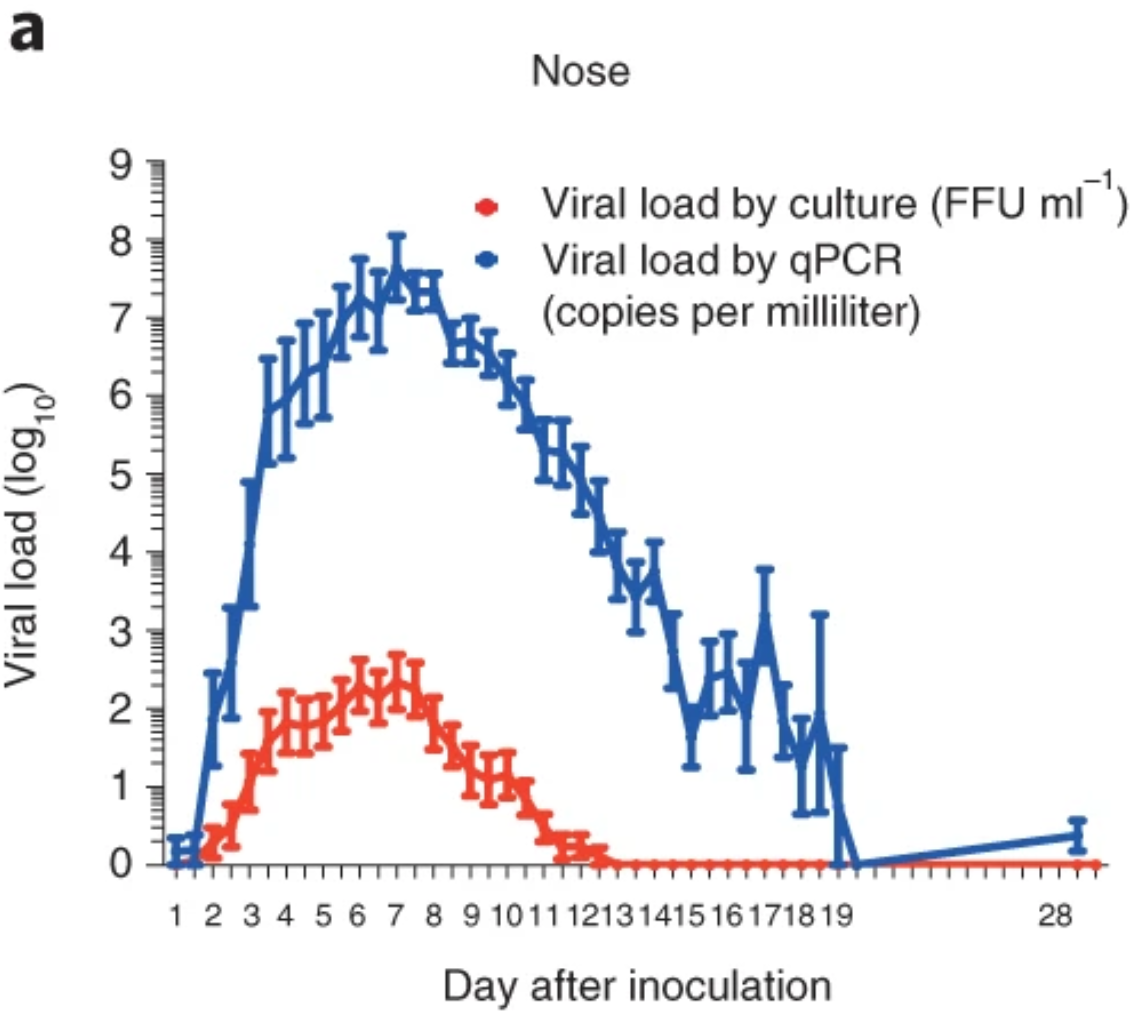
The results of the first, or at least one of the first, studies where volunteers are deliberately infected with COVID-19, have just been published. In an interesting and important paper by Killingley et al. Thirty-four volunteers were exposed to a dose of COVID-19*. As a result half of them became infected, and of these 18, 16 showed symptoms at at least one time during the infection, while 2 (11% of those infected) never showed any symptoms. One of the big advantages of studies like this, is that you know exactly when the person was exposed to virus, and can track them from that time onwards. If someone is infected in the community, you usually don’t know when they were infected, and even if you do, then you don’t know at the time, so there is a delay in studying them.
Your university can be the best, at the click of a mouse
University league tables are built on poor data analysis and arbitrary assumptions, but prospective students and their parents often use them. I can see the attraction of league tables, prospective students and their parents want to compare the different universities they are considering, and league tables are by far the most prominent, and easy to access, way to do that. But as someone who teaches data analysis, and has been an admissions tutor, university league tables make me wince.
Back to face-to-(masked)face teaching
Teaching this semester is 80% back to pre-pandemic teaching. I think students and staff appreciate this. It is certainly good to be back in the computing lab, teaching computational modelling to second years. Each student is doing a little research project, with results from a code they write. This is supervised by an academic, with help from a PhD-student demonstrator. COVID-19 has not gone away – the class demonstrator was off for a couple of weeks with COVID – but for healthy young adults, COVID-19 is usually mild.
Humid summers, dry winters – at least until you go outside
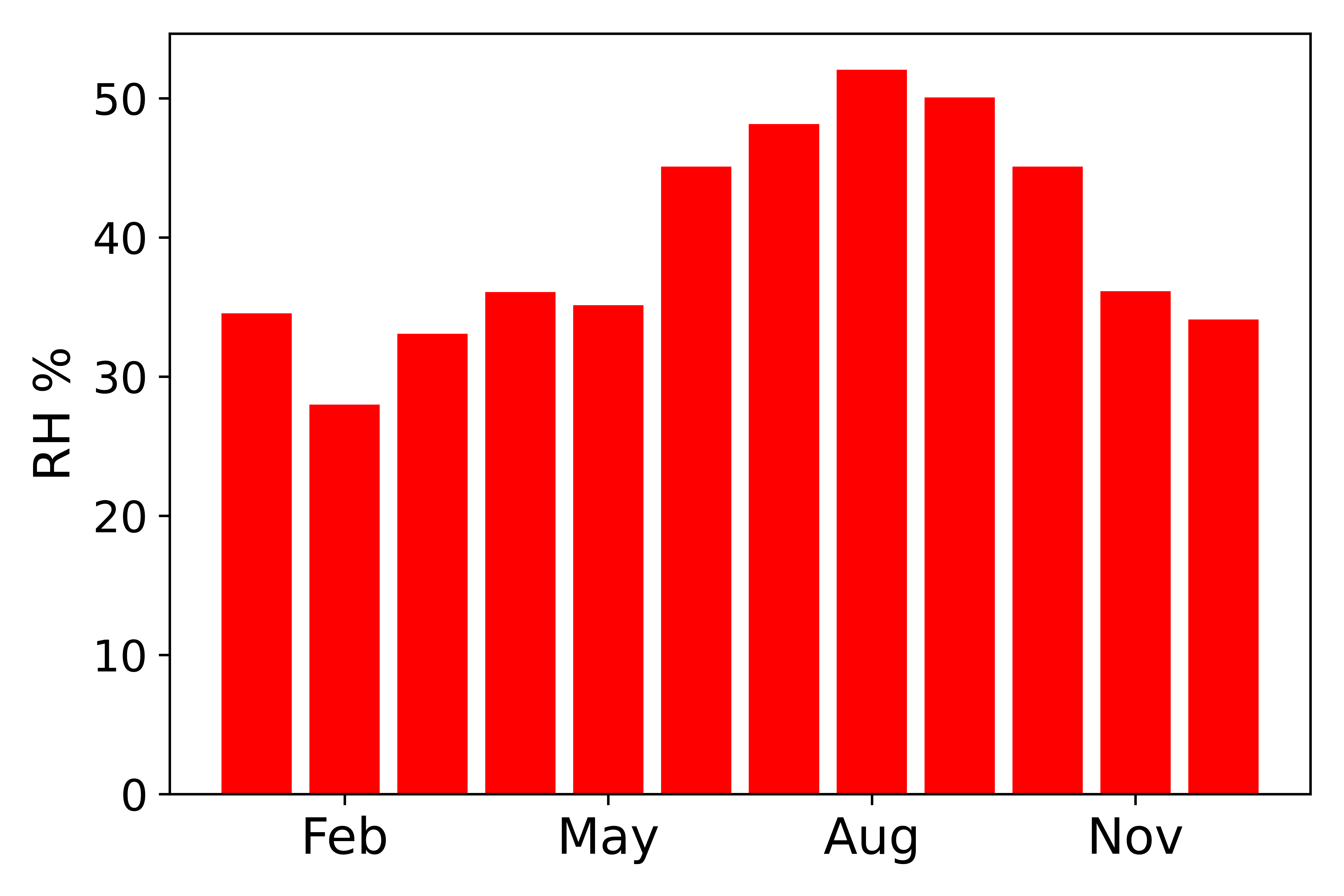
Above is a plot of the average relative humidity (RH) inside a house, for each of the 12 months of the year. The relative humidity is the amount of water in the air, as a % of the maximum amount of water that the air can hold. So 0% RH is completely dry air – no water – while 100% RH is air completely saturated with water. The RH is basically what people call the humidity, in the sense that when they say it is very humid, they mean a RH that is close 100%. The data above was collected in Sweden by Engvall and coworkers.
Open access publishing: Where did it all go wrong?
Twenty five years ago, in 1997, I published my first green open access paper* – although this is so long ago that the term ‘green open access’ wasn’t used then. Open access publishing, is making available a paper (typically presenting the results of taxpayer funded research) so that everyone can read it for free. I can’t remember much about that paper – it was a long time ago – but the paper is green open access because as well as being published in a journal, it is on the arXiv server – where everyone can read it for free. Submission to arXiv has always been pretty slick and well designed, so I suspect it was easy to do. It required zero paper work and cost nothing.
How likely are you to get COVID in a sauna?
We don’t know the answer to this question. Over the two years of the pandemic there has been a fair amount of debate on how far COVID-19 can spread, with some people, incorrectly, thinking that it rarely travels more than a metre or two across a room. But we have clear examples, such as in a restaurant in Guangzhou, where COVID-19 spread across a room. So, I hope this debate is settled, you can catch COVID-19, and almost certainly, flu, from across a room. We also know that masks offer some protection, with FFP2/N95 masks offering much more protection than cloth masks.
From a Nobel prize winner to a dislike of Excel
This week, apart from the usual teaching and research, I both attended the Department’s annual Lewis Elton lecture, and read a blog post that takes a swipe at Excel. The lecture was given by Prof Adam Reiss (Johns Hopkins) who shared the 2011 Nobel prize in physics with Saul Perlmutter and Brian Schmidt, for showing that the expansion of the universe appears to be accelerating. This surprised a lot of people but appears to be true, not only is the Universe continually getting bigger and bigger but the rate at which it is doing so, is also increasing. This surprise won the Nobel prize.
Evidence that masks work in practice, especially if they are the good ones: the N95/KN95/FFP2s
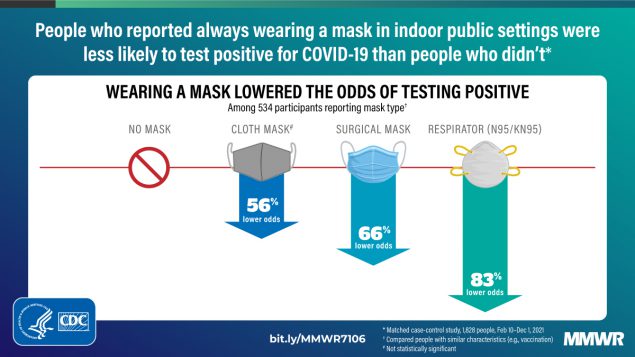
Above is a figure from a recent study published by the American government’s CDC (Centers for Disease Control and Prevention)*. Essentially, Andreko and coworkers studied two populations in California: one of 600 people who had just tested positive for COVID-19, and one of 1,100 who had not. They asked both sets of people about mask wearing while in public settings indoors (i.e., shops, workplaces, etc). Then they got the risk reduction from the numbers of mask wearers in the two populations. The idea being that if masks work you would expect a higher fraction of the 1,100 who don’t have COVD-19 to wear masks, than the 600 people who do. The way to read the figure is that they estimate that wearing an N95/KN95 (similar to FFP2, KF94, …) while indoors reduces your risk of catching COVID-19 by 83%.
Why does flu arrive in the autumn?
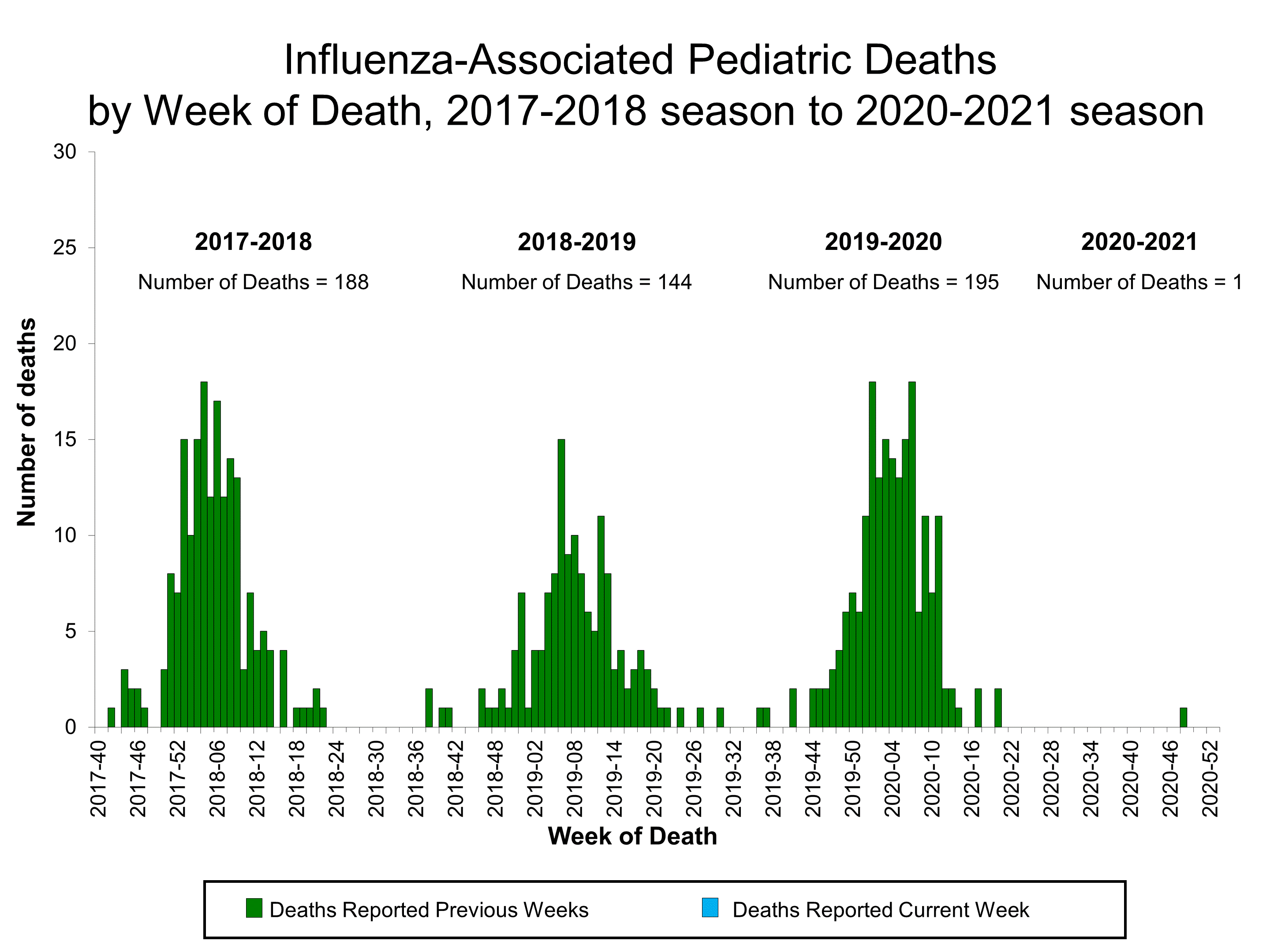
Above is a plot of deaths of children from flu in the USA, from 2017 to 2020. The data is from the USA’s CDC. I think the data in the UK will be similar, although the numbers will be lower as we have about a fifth the population of the USA. I just want to make three observations about this data.
 Chance & Necessity