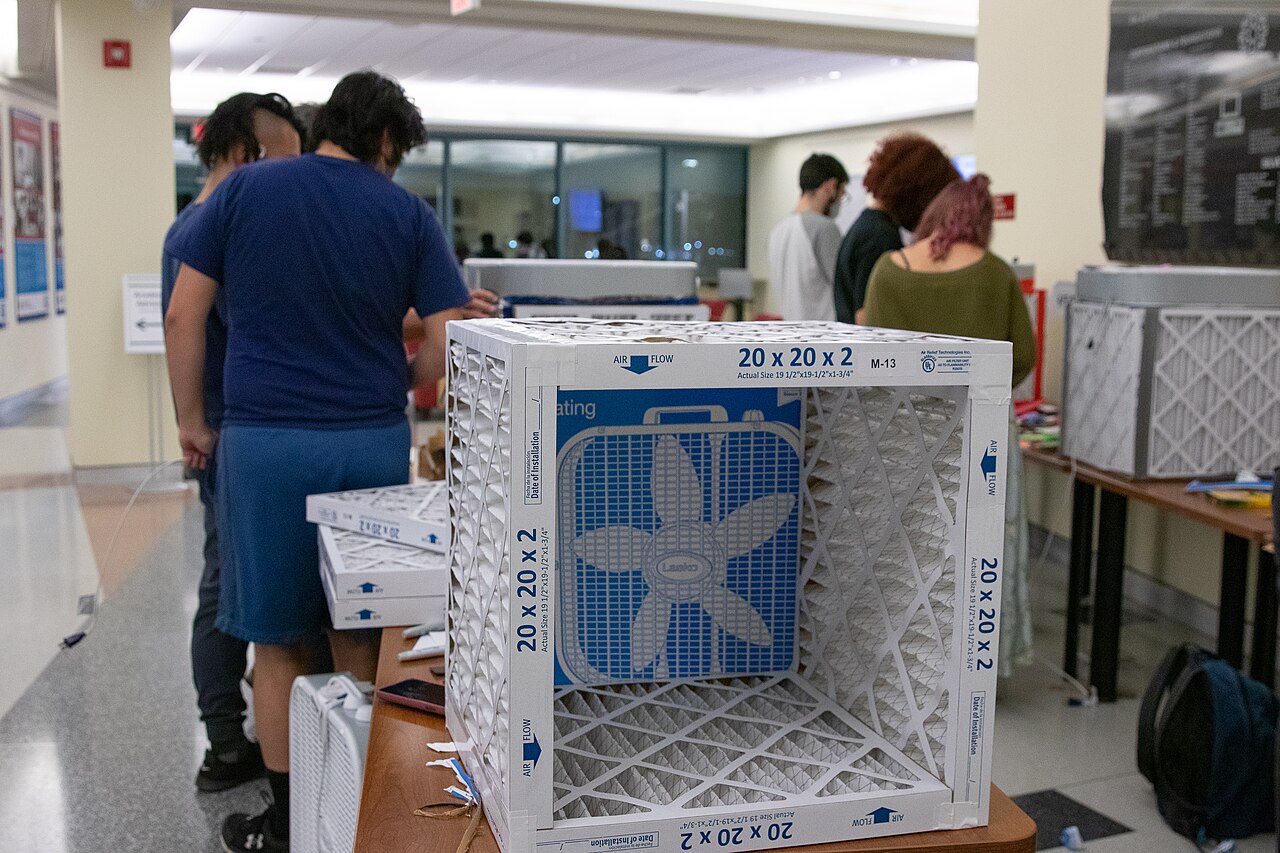
A standard air filtration system* costs very roughly £450 per year, so one in a classroom with 30 children costs £15 per child per year. The unit filters air such that it filters the classroom air around twice an hour. If we start with a perhaps typical classroom where the ventilation turns over the air twice an hour, then the filter doubles the air turnover rate and so should roughly halve the amount of aerosolised virus in the air. Using the formula in my previous blog post, this gives an estimated 20% reduction** in transmission of flu, COVID and other airborne diseases. For £15 per child per year.
The maths behind the cost estimate is as follows: An air filtration unit that can filter 500 m3/h costs around £500***, the HEPA filters cost around £100 and need replacing maybe once a year. The unit’s electricity consumption is less than 100W, say around 500 Wh for a school day. For a 200 day school year, this is 100 kWh per year. Electricity in the UK is currently capped**** at bit less than 30 p per kWh. So this is £30 per year in electricity. If an air filter machine lasts a few years before being replaced, then the total of machine plus filters plus electricity is perhaps £450 per year or £15 per child per year, for 30 children in a classroom.
To put the number into context: I think it is fair to say that one area under a lot of pressure in the UK is social care, for example, the cost of care homes for the elderly. This costs £60,000 + per person per year. If say fixing it could be done by increasing funding by 10% (optimistic!) then that is £6,000 per person per year, 400 times as much per person as reducing the transmission of airborne diseases in classrooms.
This seems quite good value to me, but I doubt if it will happen. The UK’s government’s budget is under a lot of pressure, and sadly neither education nor public health appear to be priorities.
* The image up top is a cheaper (maybe slightly noisier) homemade air filter system that illustrates what they are: Just a fan and air filters. This is called a Corsi-Rosenthal box and the image is from a competition to make them.
** Putting error bars/confidence intervals on this number is tricky as it the result of a serious of estimates, but a guesstimated confidence interval would around a factor of 2 either way, effect on transmission is likely to be somewhere in the range 10 to 40%.
*** For example the Smart Air Blast Mini Air Purifier.
**** This electricity price is at time of writing, see here.


