Move over quantum computing, neuromorphic iontronics is here

About 100 years ago, quantum physics was invented. Then around 70 years later in the ’90s along came quantum computing. And now quantum computing is quite topical. Similarly, over a hundred years ago electrokinetics was developed, then in the early 2000s, along came iontronics, which is on the rise. Iontronics is to electrokinetics roughly as quantum computing is to quantum physics. Quantum computing is an application of quantum physics to doing computations, or making machines to do computing. Electrokinetics is moving around ions etc, often in solution, while iontronics is moving around ions to do computations, or make a computer.

More

Bullshit images

Hicks, Humphries and Slater have recently published a paper entitled ChatGPT is bullshit. First of all, 10/10 to them for the paper title. Their point is simple:

Applications of these [LLMs like ChatGPT] systems have been plagued by persistent inaccuracies in their output; these are often called “AI hallucinations”. We argue that these falsehoods, and the overall activity of large language models, is better understood as bullshit in the sense explored by Frankfurt (On Bullshit, Princeton, 2005): the models are in an important way indifferent to the truth of their outputs. 

I think this is a fair point, LLMs do produce results that are just wrong, and seem rather indifferent to whether their output is correct.

More

Not all viruses are the same

Above are schematics of 4 very different viruses (schematic from the PDB). From left to right: The giant of the 4 is the mpox or monkeypox virus, that is a current cause of concern, the WHO declared mpox a “public health emergency of international concern” last week. We appear to have a very poor understanding of how mpox is transmitted except via “close [(broken?) skin to (broken?) skin, prolonged?] contact”. Next is HIV, which is transmitted via sex and blood. The third is SARS-CoV-2, the cause of COVID-19 and the recent pandemic, which is mainly transmitted across the air. Finally, the tiny one is poliovirus, the cause of polio, which is transmitted in food/water.

More

Can LLMs like ChatGPT fit a straight line to noisy data?

Large Language Models (LLMs) like OpenAI’s ChatGPT, Google’s Gemini, Anthropic’s Claude and Microsoft’s Copilot are very topical nowadays, and they can all write Python code. Up till the last academic year*, I had a coursework element for my biological physics teaching that was basically to chose variables correctly and then to fit a straight line to noisy data**. I did this partly because data fitting is such a useful skill that I thought using coursework to push students into practicing it, would help them – not sure the coursework was that popular but I contend it taught useful skills.

The students’ performance was mixed, and I was curious to see if ChatGPT et al could do better, given a good prompt. ChatGPT itself couldn’t (at first go), but Gemini’s, Claude’s and Copilot’s code was correct.

More

Making pretty pictures

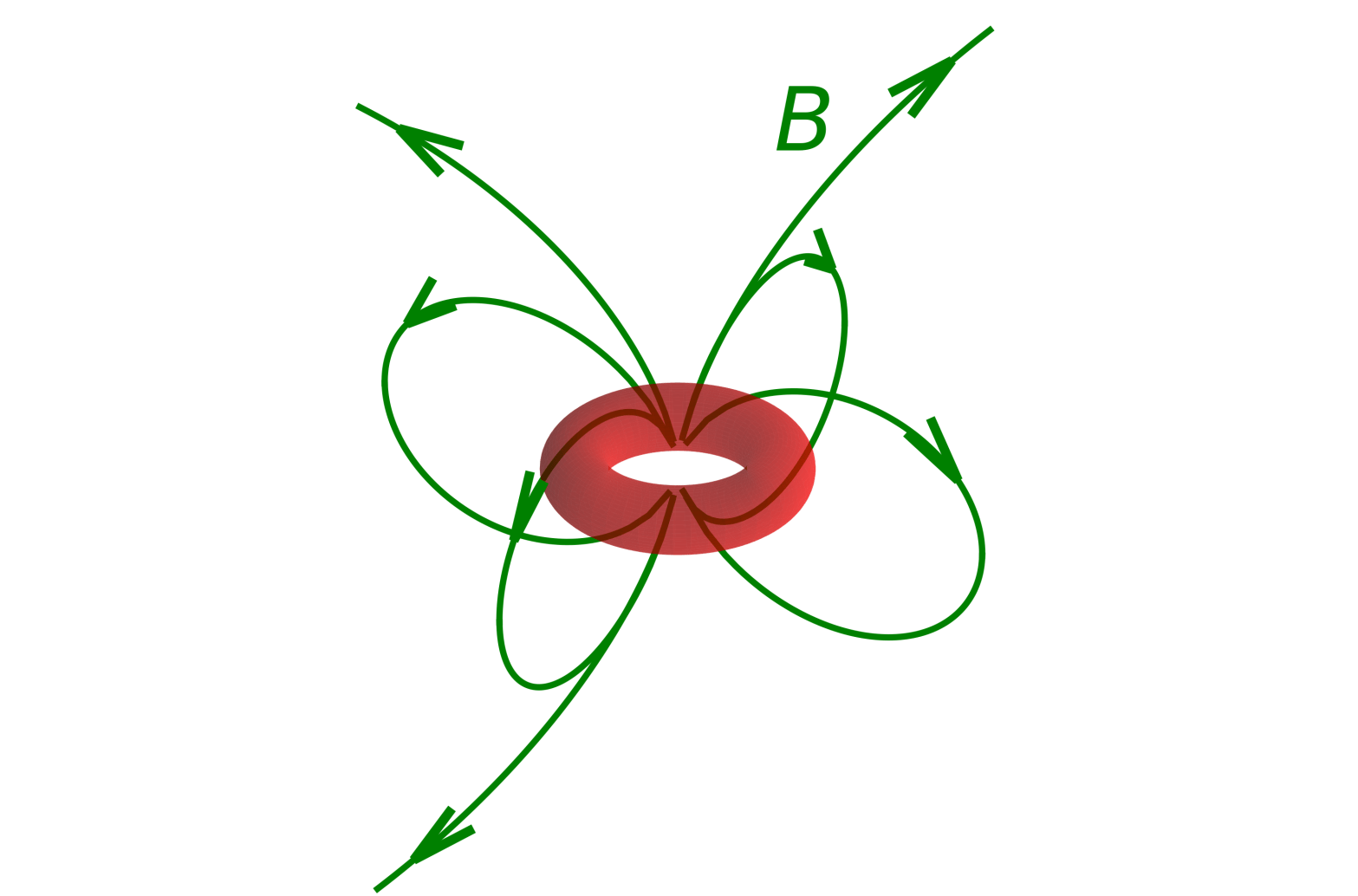
Summer at university is quieter so there is more time for doing time consuming but fun things like doing some nice figures. I like doing pretty figures but it can take more time than I have in term time. This is especially true of 3D figures that always take a lot of fiddling with details until they look OK. The image above is of the magnetic field B (green field lines and arrows) produced by a magnetic dipole*, which can be produced by the current loop shown as the red donut.

More

Scientists dueling via Guildford’s MPs

In the general election, I voted for Zöe Franklin (Lib Dems) not Angela Richardson (Conservative), and was happy when Franklin won, but to be fair I think Richardson took her responsibilities as a constituency MP seriously. A few months ago I wrote to Richardson to express puzzlement at some of the NHS’s guidance on preventing airborne diseases spreading. Richardson then forwarded it to the office of the then minister Maria Caulfield, who replied. The reply is at the bottom of this post as a pdf.

More

Travis Kelce illustrating how to spread airborne diseases

The Kansas City City Chiefs went on to win the 2024 Super Bowl, but part of the way through the match both the team as a whole and their player Travis Kelce were up against it. Under huge pressure, Kelce gave the Chiefs’ coach, Andy Reid, both barrels from up close – see image above. Kelce apologised afterwards, and the coach seemed relatively unbothered. The incident is sufficiently famous that it has spawned memes, and a meme generator. My attempt at a meme is above: Kelce and Reid illustrate almost perfectly the ideal setup for one person, here Kelce, to transmit an airborne disease such as COVID-19 or flu, to another person, here Reid.

More

Unknown unknowns and Breathtaking

In the first episode of Breathtaking – ITV’s drama about the NHS in the COVID-19 pandemic – there is a scene where they suspect a patient may have COVID-19. They put the patient in a small side room, and try but fail to order a COVID-19 test. This is early in the pandemic, when tests were being rationed by the NHS/government. They suspect he has COVID as his symptoms are unusual, but are consistent with what they know about COVID. The episode shows the staff being, understandably, stressed by having to share a small room with someone who may or may not have a new, potentially fatal, disease.

More

Are there Elon Musks of COVID infectiousness? If so are they superspreaders?

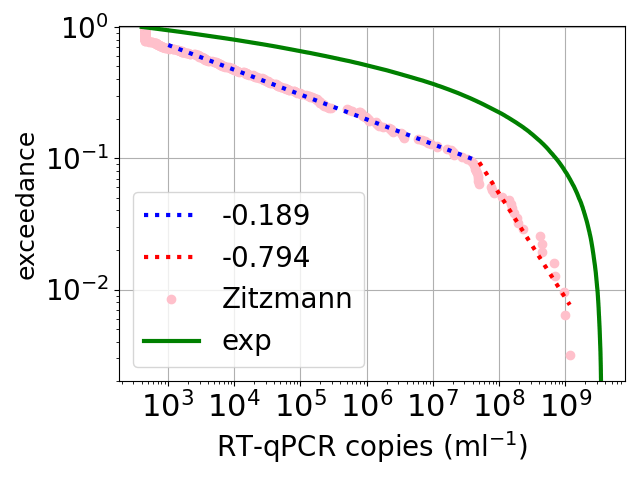
Above is a plot of estimated viral load for a sample of people infected with COVID-19. It is a probability (density) distribution, so the x axis is how much virus is in the saliva of the person, and the height of the points (y axis) tells you how many people have that load. Note that there are two studies, one by Viloria Winnett and coworkers and one by Takatsuki and coworkers, and that both found an enormous range of amounts of virus. Many orders of magnitude in both cases. The units are estimated numbers of copies of the viral RNA gene, per millilitre (ml). The points are the data while the lines are my power law fits, in both cases the exponents are close to minus one. The probability of having a viral load v scales approximately as one over v.

More